

3 Best At-Home IPL Hair Removal Devices (2026): How to Choose Safely
By Rakib Sarwar | Last updated: | Editorial policy
As an Amazon Associate we earn from qualifying purchases. This does not change what we recommend. See our affiliate disclaimer.
At-home IPL hair removal devices flash broad-spectrum light at the skin so the pigment in each hair absorbs the energy. Over repeated sessions, that can slow regrowth and make hair finer. They are popular because they promise salon-style results at home, but they work well for some people and poorly or unsafely for others, and the box rarely explains why.
The deciding factor is contrast. Cleveland Clinic, in an article reviewed by a dermatologist, explains that laser and IPL devices target pigment in the hair follicle, so they work best on light skin with dark hair. Many home devices include a skin-tone sensor that blocks flashing on darker skin to lower the risk of burns. Hair that is light, gray, white or red usually has too little pigment to respond, and the same article says home devices are generally less powerful than professional lasers and may only reduce hair, not remove it. Choose a device based on your skin tone and hair color first, and on features second.
In short: check that your skin tone and hair color fall inside the range the maker lists, confirm the exact model is FDA cleared, do a patch test, protect your eyes, and expect several sessions about a month apart with occasional touch-ups.
This guide is research-based. We did not lab-test these devices and we have not used them, so we do not rank them by results. We compare maker-listed features and FDA documents, and we explain how to read any listing. The table shows three IPL devices from two brands that appeared in the product search we used; it is a starting point, not a full market survey. This is general information, not medical advice.
Good for
- Light to medium skin with dark brown or black hair, within the maker’s listed range
- People willing to run a series of sessions and repeat occasional touch-ups
- Hair on the legs, arms, underarms, bikini line and face below the cheekbones, as the manual allows
Be careful about
- Dark or tanned skin, where burns and color changes are more likely
- Light, gray, white or red hair, which may not respond
- Tattoos, moles, freckled or pigmented patches, and the eye area, which must be avoided
- Pregnancy, photosensitizing medications and skin conditions: ask a clinician first
Key Takeaways
- IPL targets pigment in hair, so contrast between hair and skin decides how well it works and how safe it is.
- Home devices are generally less powerful than professional lasers, according to Cleveland Clinic, and often reduce hair rather than remove it.
- Results usually need several treatments about a month apart, and some people need touch-ups.
- FDA clears IPL hair removal devices model by model, so confirm that the exact model you buy is covered.
- Never flash near the eyes, over tattoos or moles, or on skin outside the maker’s listed range.
- Do a patch test, stop if skin burns or stings, and ask a clinician if you are pregnant or take medication.
- Shaving, waxing and professional treatment remain valid options, and a dermatologist can advise on your skin.
Top Picks: Three IPL Devices to Compare
These devices come from the product search available to this site. Two are from Ulike and one is from dreame. They are options to compare, not a ranking.


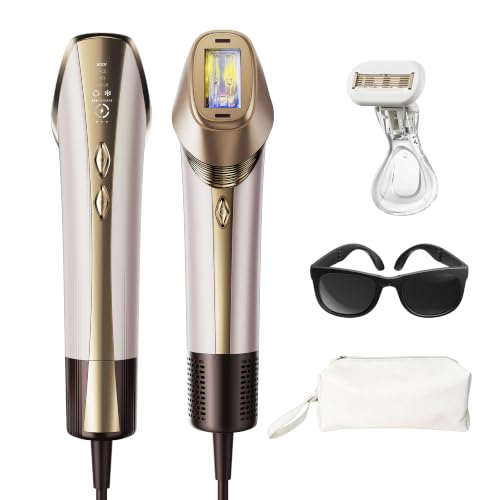
Each button opens the Amazon listing. Check the maker’s stated skin-tone range, hair-color range, eye-safety guidance and FDA clearance for the exact model before you buy.
Product-by-Product Notes
These notes use only what each listing states, plus the safety points covered above. They are not test results, and the order follows the table, not a ranking. Before buying any of them, confirm the exact model number in an FDA clearance document or with the maker.
Ulike Air 4 IPL Hair Removal Device

Best for: Light to medium skin with dark hair, for shoppers who prefer a brand with FDA paperwork
The listing describes an IPL device for women and men and shows a Global Recycled Standard label. Ulike also appears in FDA documents: the clearance letter we read covers earlier Ulike IPL models and lists Fitzpatrick skin types I to V as the range for those models.
That letter does not automatically cover this model, so find the Air 4 model number and check it. Whatever you pick, use the skin-tone range in the manual, patch test and protect your eyes.
- IPL device listed for women and men
- Global Recycled Standard label shown on the listing
Pros
- Maker with FDA clearance documents on earlier models
- Clear intended use as an IPL hair device
Cons
- Clearance for this exact model is not confirmed by us
- Listing gives few specifications
Skip it if: you have dark or tanned skin, or light, gray, white or red hair.
Ulike ME Laser Hair Removal Device

Best for: People who want a cooling feature for comfort and a known brand
The listing describes a device with ice cooling care for women and men. Cooling is a comfort feature rather than a performance guarantee, but it can make flashing easier to tolerate, especially on sensitive areas.
The listing says little else, so confirm the skin-tone range, the number of energy levels and the eye-safety guidance in the manual. As with any IPL device, check that the model itself is FDA cleared.
- Ice cooling care
- Listed for women and men
Pros
- Cooling plate for comfort
- Brand with FDA documents on earlier models
Cons
- Few specifications on the listing
- Model clearance needs checking
Skip it if: you have darker skin or very light hair, where IPL is a poor fit.
dreame Astra IPL Hair Removal Device

Best for: Shoppers who want a long spec list, including a large window and skin-tone detection
The listing states a dual-lamp device with 35J output, sapphire ice cooling, a 5.4 cm2 large window, a 0.2 second continuous flash and tone detection that the maker calls Adaptizone. A larger window can cover legs and arms faster, and tone detection is the kind of sensor that can block flashing on skin that is too dark.
The listing also says up to 80 percent reduction. That is a maker claim; FDA documents define permanent reduction differently, as a long-term, stable reduction measured at 6, 9 and 12 months. Confirm clearance for this model and use the stated skin range.
- Dual lamp with 35J output (as listed)
- 5.4 cm2 window and 0.2 second continuous flash (as listed)
- Sapphire ice cooling and tone detection (as listed)
Pros
- Large window listed for bigger areas
- Tone detection sensor listed
Cons
- The 80 percent reduction claim is the maker’s own
- FDA clearance for this model is not confirmed by us
Skip it if: you have dark or tanned skin, or you want a device with published independent test results.
How We Compared
We compared maker-listed features and FDA documents, and we read dermatology guidance from Cleveland Clinic. We did not lab-test the devices, we have not used them, and we show no prices or ratings. We state a figure only where a maker or FDA document gives it.
The market for at-home IPL devices is crowded with similar-looking models that carry bold claims, so reading a listing critically matters more than a short ranking. Use the sections below to judge any device, including those not shown here.
How IPL Hair Removal Works
An IPL device releases a flash of broad-spectrum light. The melanin in your hair absorbs it and turns it into heat, which is meant to damage the follicle so hair grows back more slowly or finer. Skin pigment absorbs light too, which is why higher-contrast combinations respond best and why darker skin carries more risk.
Hair grows in cycles, and Cleveland Clinic notes that treatment only affects follicles in the active growth phase. That is why one session cannot remove everything and why makers recommend a series spaced weeks apart. Many devices have a cooling plate or a skin-contact sensor, which are comfort and safety features rather than performance guarantees.
Skin Tone and Hair Color
Skin tone and hair color determine whether a device is suitable. Makers often refer to the Fitzpatrick scale, a six-step way to describe how skin reacts to sun. In an FDA clearance letter for several Ulike IPL models, the submitter lists Fitzpatrick skin types I to V for those models. Other makers use different ranges, so read yours.
| Hair and skin combination | What to expect | Next step |
|---|---|---|
| Light skin, dark brown or black hair | The best fit, because contrast helps the light target hair. | Check the manual, patch test and start on the lowest setting. |
| Medium skin, dark hair | May suit some devices; follow the sensor and the maker’s range. | Patch test and consider asking a dermatologist. |
| Dark or tanned skin | Higher burn and color-change risk, and many devices block flashing. | Ask a dermatologist about professional options before trying a home device. |
| Light blonde, red, gray or white hair | Too little pigment to absorb light, so little effect is likely. | Consider other hair removal methods. |
Recent sun exposure or self-tanner can make skin look darker to the device and raises the risk of irritation. Follow the manual about sun exposure before and after treatment and ask a clinician if you are unsure.
What FDA Clearance Tells You
IPL hair removal devices are regulated as medical devices in the United States, and makers can market them after FDA clears them through a 510(k) review. Clearance letters list what the device is intended for. One FDA letter we read describes an over-the-counter device intended for removal of unwanted body or facial hair. The Ulike letter we read adds an indication for permanent reduction in hair regrowth, which it defines as a long-term, stable reduction in regrowing hairs measured at 6, 9 and 12 months after a treatment regime.
Two cautions follow. First, clearance applies to named models, so a newer model with a similar name may not be covered; look for the model number in the FDA database or ask the maker. Second, “permanent reduction” is a defined term, not a promise of lifelong hairlessness, and Cleveland Clinic notes that some people never reach complete hair loss with a home device. Treat any page that says “permanent hair removal” without that context with suspicion.
Safety Checks
IPL devices still emit intense light, so use them exactly as the manual states. Cleveland Clinic advises keeping the device away from the eyes, tattoos, moles and other pigmented areas, and the genital area, while noting that the upper lip and bikini line are generally acceptable. Maker manuals also usually cover patch testing, goggles and areas to avoid.
- Do a patch test on a small area and wait the time the manual states before treating larger areas.
- Cover or protect your eyes as the manual directs and never flash near the eyes.
- Do not use over tattoos, moles, freckled or pigmented patches, broken or sunburned skin.
- Stop if the skin burns, blisters, stings or turns very red, and cool it gently.
- Use sun protection on treated areas, since they can be more sensitive.
- Ask a clinician before use if you are pregnant, take medication that affects sun sensitivity, or have a skin condition.
- See a doctor or dermatologist for blisters, lasting pain, color change or any eye irritation.
Features to Compare
Because no independent test data sits behind these listings, compare on features that affect safety and use.
| Feature | Why it matters | What to check |
|---|---|---|
| Skin-tone sensor | May block flashing on skin that is too dark, lowering burn risk. | The maker states a sensor and its skin-tone range. |
| FDA clearance for the model | Shows the model went through FDA review. | The model number appears in an FDA clearance document. |
| Energy levels | Lets you start low and raise the level as comfort allows. | The maker lists how many levels and how to change them. |
| Cooling plate | Can make flashing more comfortable. | The maker describes how cooling works and how to use it. |
| Flash count and lamp life | Tells you how many flashes you get before the lamp is spent. | The maker lists the lamp life in flashes. |
| Window size and gliding mode | A larger window covers legs faster, a small one suits face and underarms. | The maker gives window size and modes. |
| Included goggles and manual | Eye protection and clear instructions support safe use. | The listing shows goggles and a printed manual. |
Phrases such as “painless” or “permanent” are marketing. Look for specifics: the stated skin-tone range, the FDA model number and the manual.
A Worked Example: A First Month
This example shows a cautious start for someone with light skin and dark leg hair. It assumes the manual allows this and that no skin condition applies, so follow your own manual first.
| When | What to do | Reason |
|---|---|---|
| Day 1 | Read the manual, then shave the patch area and do a patch test. | Many manuals ask you to shave first, and a patch test shows how your skin reacts. |
| Day 2 | Check the patch test area for redness, stinging or blistering. | Skin reactions can show up after the flash. |
| Day 3 | If skin is fine, treat one small area on the lowest level. | Starting low limits the chance of irritation. |
| Week 2 to 4 | Repeat at the interval the manual gives, raising the level only as comfort allows. | Hair grows in cycles, so treatments are spaced out. |
| Ongoing | Apply sunscreen to treated areas and keep a log of dates and settings. | Treated skin can be more sensitive to sun. |
IPL at Home Versus Professional Treatment
Cleveland Clinic says home devices are less powerful and therefore generally less effective than professional lasers, and that professional treatment can be used on a wider range of skin tones. Professional sessions cost more per visit and also usually need several treatments, and the clinic’s dermatologist says professional removal usually offers better value overall.
Home devices give privacy and convenience, and you can treat a few areas on your own schedule. They are slower on large areas such as a whole leg. If you have darker skin, light hair or a skin condition, a consultation with a dermatologist or licensed provider is a sound first step.
How to Choose in 7 Steps
- Match your skin tone and hair color to the maker’s listed range.
- Confirm that the exact model is FDA cleared, using the model number.
- Look for a skin-tone sensor and adjustable energy levels.
- Check that goggles and a manual are included.
- Check the lamp life so you know how many flashes you get.
- Pick a window size that suits the areas you want to treat.
- Read the return and warranty terms, and buy a model sold on Amazon.com with a US plug.
Do and Do Not
Do
- Patch test first
- Start on the lowest level
- Shave the area before treating, as the manual directs
- Protect your eyes
- Use sunscreen on treated skin
Do not
- Use it over tattoos, moles or pigmented skin
- Flash tanned or sunburned skin
- Treat near the eyes
- Raise the level when skin stings
- Share the device if the maker advises against it
Who Should Skip This
People with dark or tanned skin, or light, gray, white or red hair, should not expect a good fit from most home IPL devices and may want a professional opinion. Anyone who is pregnant, takes medication that increases sun sensitivity, or has a skin condition in the treatment area should ask a clinician first.
If you only want smooth skin for an occasion, shaving or waxing may be a simpler choice, since IPL needs weeks of sessions before you see any change.
Honest Limits
- IPL reduces hair for many people but does not remove it completely for everyone.
- Results are not always permanent, and some users need yearly touch-ups.
- Home devices are generally less powerful than professional lasers.
- Light, gray, white and red hair respond poorly.
- This guide compares listings and FDA documents, not lab results.
- Clearance covers named models, so check the model you buy.
When to See a Professional
See a dermatologist or licensed provider if you have darker skin, a skin condition, many moles in the treatment area, or want a plan for large areas. See a doctor for blisters, lasting pain, color changes or any eye irritation after treatment. This page is general information and does not replace advice from a licensed clinician.
Frequently Asked Questions
Does at-home IPL hair removal work?
For many people with light skin and dark hair it can reduce regrowth over several sessions. Cleveland Clinic says home devices are generally less powerful than professional lasers and may only reduce hair, so expect gradual change and occasional touch-ups rather than guaranteed removal.
Is IPL hair removal permanent?
Not always. FDA documents define permanent reduction as a long-term, stable reduction in regrowing hair measured at 6, 9 and 12 months, not lifelong hairlessness. Cleveland Clinic notes that some people need yearly touch-ups and some never reach full hair loss.
Can I use IPL on dark skin?
Most home devices are meant for lighter skin, and many have a sensor that blocks flashing on darker skin to reduce burn risk. If you have dark or tanned skin, ask a dermatologist about professional options and follow the maker’s stated range.
Does IPL work on blonde, red or gray hair?
Usually not well. IPL targets pigment in the hair, and light, red, gray and white hair has little pigment to absorb the light. Dark brown or black hair on light skin gives the best contrast, so other methods may suit light hair better.
How many sessions does IPL take?
Several. Hair only responds in its active growth phase, so makers space treatments weeks apart, often about a month according to Cleveland Clinic. The exact schedule depends on the device and your hair, so follow the manual and expect maintenance sessions.
Where on the body should I avoid IPL?
Avoid the eye area, tattoos, moles and other pigmented patches, and the genital area, and do not treat broken or sunburned skin. Cleveland Clinic notes the upper lip and bikini line are generally acceptable, but always check your own manual.
Do I need a patch test before using IPL?
Yes, follow the maker’s instructions. A patch test on a small area, with a wait for any redness or stinging, helps show how your skin reacts before you treat larger areas. Stop if the skin burns, blisters or hurts.
Is an FDA-cleared IPL device always safe?
Clearance means the model went through FDA review for its stated use, but it does not make misuse safe. Clearance also applies to named models, so check the exact model number and follow the manual, including skin tone limits and eye protection.
Can I use IPL if I am pregnant or take medication?
Ask a clinician first. Pregnancy and medications that increase sun sensitivity are common cautions in maker manuals, and we cannot judge individual cases. Your doctor or dermatologist can say whether light-based treatment is suitable for you.
Is IPL better than shaving or waxing?
It is slower to start but aims to reduce regrowth over time, while shaving and waxing give immediate results with no device cost. IPL suits patient users with suitable skin and hair, and shaving may be simpler for occasional smoothness.
Bottom Line
An at-home IPL device can reduce hair for people with light skin and dark hair, but it is not a universal or guaranteed solution. Match the device to your skin tone and hair color, confirm FDA clearance for the exact model, and follow the safety steps every time.
If you have darker skin, light hair or a skin condition, a dermatologist can suggest better options than a home device. Expect gradual results and occasional touch-ups.
Related reading: Nano ionic face steamers: what to check before you buy | About ChicCheek and its editor