
6 Best Facial Wands for Collagen Claims (2026): What the Evidence Says
By Rakib Sarwar | Last updated: | Editorial policy
As an Amazon Associate we earn from qualifying purchases. This does not change what we recommend. See our affiliate disclaimer.
A “collagen-boosting wand” is a handheld facial device that uses light, a mild electrical current, gentle heat or vibration, and sometimes a combination of these, with the aim of making skin look firmer and smoother. The name suggests a clear mechanism, but collagen is a protein inside the skin, and no handheld device can be shown to build it just because a listing says so.
Here is the honest picture. Red and near-infrared light has the most research behind it. Harvard Health reports that the American Academy of Dermatology says research suggests red light therapy may help with fine lines and wrinkles, skin texture and redness, but the same article says researchers have not settled the right dose, home devices vary in strength, and results take regular use several times a week for four to six months. Other wand types, such as microcurrent and radiofrequency tools, have less independent evidence we could find for home use. Treat any wand as a gentle, optional step that may help skin look better over time, not as a way to reverse aging, and expect to protect your skin with sunscreen as well.
In short: pick a wand whose method you understand, check that it states FDA clearance if it uses light, follow the manual and eye protection advice, and give it months, not days, while keeping sunscreen and moisturizer as your base routine.
This guide is research-based. We did not lab-test these wands and we have not used them, so we do not rank them by results. We compare maker-listed features, dermatology and FDA guidance, and the limits of the evidence. The table shows six widely reviewed wands from five brands. This is general information, not medical advice.
Good for
- Adults who want a gentle, optional device step added to a sunscreen and moisturizer routine
- People willing to use a device regularly for several months before judging it
- Anyone who values a handheld shape for face and neck as the maker lists
Be careful about
- Promises of collagen building, face lifting or wrinkle removal without clear sources
- Light-sensitive conditions and medications that increase sun sensitivity: ask a clinician first
- Darker skin with light-based wands: ask a dermatologist, since visible light can cause dark spots
- Any skin spot that is new or changing, which needs a dermatologist, not a device
Key Takeaways
- Red and near-infrared light has more research than other home wand methods, but doses are not settled and home devices vary in strength.
- Results, if any, take regular use several times a week for months, according to Harvard Health.
- Wands do not replace sunscreen, moisturizer or professional care.
- Cleveland Clinic says in-office light treatments are stronger than at-home devices, which may produce only subtle changes.
- Choose light-based wands that state FDA clearance, and follow eye protection advice.
- Avoid light-based wands if you have a light-sensitive condition or take photosensitizing medicine, unless a clinician agrees.
- Skip collagen, lifting or anti-aging claims that name no source.
Top Picks: Six Facial Wands to Compare
These wands come from five brands and use different methods, so read each listing to see which method it uses. They are options to compare, not a ranking.



Each button opens the Amazon listing. Look for the stated method (light, microcurrent, heat, vibration), FDA clearance where light is used, and the manual before you buy.
Product-by-Product Notes
These notes use only what each listing states, plus the safety points covered above. They are not test results, and the order follows the table, not a ranking. Light-based wands should state FDA clearance, so check the model number for any you consider.
NuFACE Hydrate + Sculpt Microcurrent Facial Device Gift Set

Best for: Shoppers who want a microcurrent device from a well-known skincare brand, as a gift set
The listing describes a six-piece gift set built around a microcurrent facial device. Microcurrent wands pass a very low electrical current across the skin, and makers describe it as stimulating facial muscles for a lifted look.
We found little independent evidence for home microcurrent devices, so treat the lift claims as the maker’s. Check whether the manual calls for a conductive gel, and avoid use over broken skin or with an implant unless a doctor agrees.
- Microcurrent facial device
- Six-piece gift set
Pros
- Established skincare brand
- Gift set format
Cons
- Limited independent evidence for home microcurrent
- May need a conductive gel as the manual states
Skip it if: you have an implanted device, are pregnant or have broken or inflamed skin.
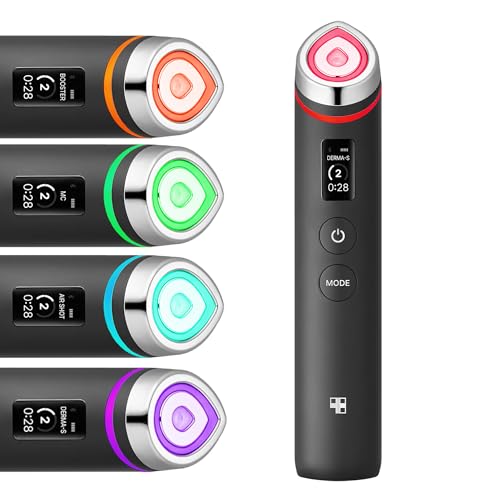
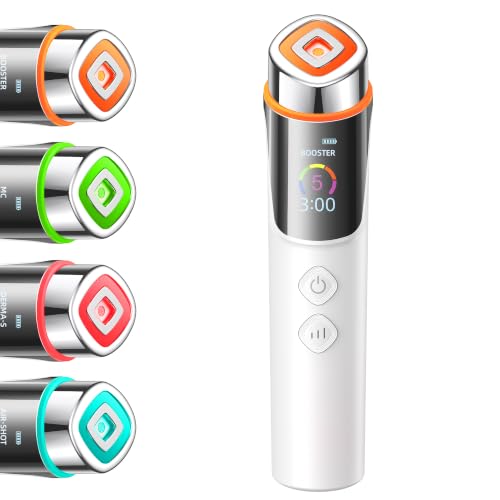
medicube Booster Pro

Best for: People who want one device with several functions and a glass-style head
The listing describes a six-in-1 glow beauty massager with a real glass head, in black. The listing title does not say which six functions are included, so open the product page and read the manual list before you decide.
Multi-function devices bring the cautions of each function, such as heat, light or current, so check each one against your skin and any medicines you use. “Glow” is a marketing word, not a tested result.
- Six functions in one device (see listing for the list)
- Glass-style head
- Black finish
Pros
- Several functions in one handle
- Brand listed with a dedicated device range
Cons
- Functions not named in the listing title
- Glow claim is not a tested result
Skip it if: you want a single, clearly explained method or you use photosensitizing medicine.
medicube Mini Booster Pro Plus

Best for: Shoppers who want a smaller, travel-friendly version of the same brand’s device
The listing describes a portable facial device for radiance, in pink. It is the smaller sibling of the Booster Pro above, which suits travel and quick sessions but may offer fewer features.
Radiance is a cosmetic goal, so a gentle device used regularly with sunscreen is a sensible expectation. Check the manual for session time, any light or heat functions and the maker’s cautions.
- Portable design
- Listed for radiance
- Pink finish
Pros
- Small and portable
- Same brand as the Booster Pro
Cons
- Listing gives few specifications
- Results vary and evidence is limited
Skip it if: you want a full feature list or a device you can compare on published specifications.
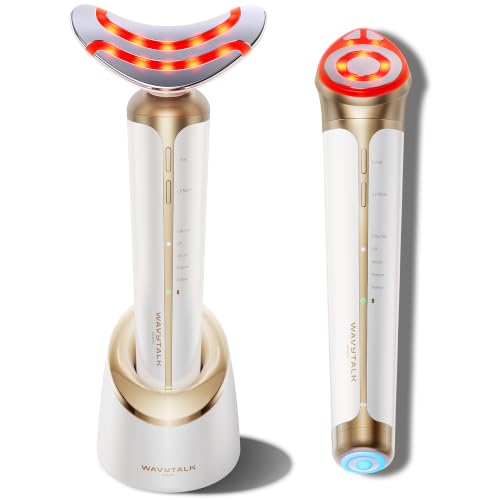
wavytalk Sculpt Time Microcurrent Facial Device
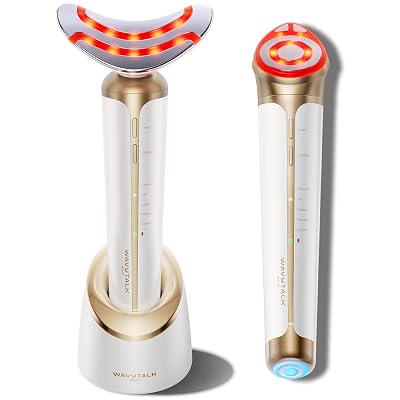
Best for: People who want microcurrent and red light in one handheld device
The listing describes a microcurrent facial device that also offers red light therapy. Red light has more published research than most home wand methods, though Harvard Health notes that doses are unsettled and home devices vary in strength.
Two methods mean two sets of cautions: light sensitivity and photosensitizing medicines for the light, and implants or broken skin for the current. Look for FDA clearance language for the light function and follow the eye protection guidance.
- Microcurrent function
- Red light function
Pros
- Combines two methods
- Red light has the most research of the methods covered
Cons
- Home device strength varies
- Microcurrent evidence for home use is limited
Skip it if: you take medicine that increases sun sensitivity, have lupus or have an implant, unless a clinician agrees.
REVO Genie Facial Massager

Best for: Shoppers who want a warm, vibrating massager with colored light modes
The listing describes a facial massager for face and neck with LED light, heat and vibration, and red, blue and green light modes. It is a sculpting and depuffing tool by the listing’s wording, and the massage itself may feel relaxing.
Heat and light both call for care: keep sessions short, protect your eyes as the manual says and stop if skin turns red or stings. Colored light modes are not all equally studied, and depuffing and sculpting are the maker’s terms.
- LED light with red, blue and green modes
- Heat and vibration
- Face and neck use
Pros
- Heat and vibration for a spa-like feel
- Several light modes
Cons
- Sculpting and depuffing claims are the maker’s
- Heat adds a burn risk if misused
Skip it if: you have rosacea or very reactive skin, where heat can increase redness.
Viconor 6-in-1 Facial Wand

Best for: People who want a red light wand with several functions
The listing describes a six-in-1 face massager and red light therapy wand and says it is for all skin types. Be careful with that phrase: Harvard Health advises people with darker skin to check with a dermatologist first and start with lower doses, because visible light can cause dark spots.
The title does not list the six functions, so read the product page for them. Look for FDA clearance language and a model number for the light function, and follow the manual on distance, session time and eye protection.
- Six functions (see listing)
- Red light therapy wand
Pros
- Red light method has research behind it
- Wand shape for face and neck
Cons
- All skin types claim needs a dermatologist check for darker skin
- Functions not named in the listing title
Skip it if: you have a light-sensitive condition, take photosensitizing medicine or have darker skin and no dermatologist advice.
How We Compared
We compared maker-listed features and read guidance from Harvard Health, Cleveland Clinic and the FDA. We did not lab-test the wands, we have not used them, and we show no prices or ratings. Where a claim comes from a maker, we say so.
Wands share a shape but not a method, and the method decides the risks and the evidence. The next sections explain the common types so you can read a listing with confidence.
Types of Wands and How They Work
Light wands shine red, near-infrared or other colored LED light on the skin. Cleveland Clinic explains that red and near-infrared light reach deeper than blue light, and that experts think red light may calm inflammation and boost collagen.
Microcurrent wands pass a very low electrical current across the skin, and makers describe it as stimulating facial muscles. Radiofrequency and heated wands warm the skin, and makers say the warmth supports firmness. Vibration and massage heads, including gua sha style tips, add massage. Many wands combine several of these in one handle.
| Wand type | What the maker usually says it does | What to check |
|---|---|---|
| Red or LED light | Supports smoother-looking skin over time. | FDA clearance, stated wavelengths, session time, eye protection. |
| Microcurrent | Stimulates facial muscles for a lifted look. | Current levels, conductive gel, who should avoid it as the maker states. |
| Radiofrequency or heat | Warms skin to support firmness. | Temperature limits, auto shut-off, skin types the maker lists. |
| Vibration or massage | Relaxes and smooths the surface. | Speed settings and ease of cleaning. |
What the Evidence Says
Harvard Health notes that the American Academy of Dermatology says research suggests red light therapy may help with fine lines and wrinkles, dark spots, skin texture, redness and other concerns. The same article, which a dermatologist reviewed, says scientists have not settled the best session length or dose and that home devices vary in light strength, which makes it hard to know how much light you are getting.
Cleveland Clinic adds that in-office treatments are stronger than at-home devices, which may produce only subtle changes, and that long-term safety is less well studied. The takeaway is balanced: light therapy is plausible and generally considered safe when used as directed, but a home wand is a modest tool.
Avoid light-based wands if you have a light-sensitive condition such as lupus, or take medicines that make skin sensitive to light, such as certain antibiotics, isotretinoin or lithium, unless your clinician agrees. If you have darker skin, ask a dermatologist first and start with lower doses, since visible light can cause dark spots.
Reading Collagen Claims
Under FDA rules, what a product claims to do decides whether it is a cosmetic or a drug. The FDA says claims such as reducing cellulite or restoring hair growth push a product toward the drug category even if it is sold like a cosmetic. A wand that says it treats wrinkles or builds collagen is making a strong claim, so look for clearance language or the maker’s cited studies.
Words like “boost,” “activate” and “rebuild” are marketing. Prefer listings that say “helps skin look smoother” and show a model number you can check. Be most careful with claims that sound medical, such as healing, treating or reversing, since no home wand has earned those words in the sources we read.
Safety Checks
Follow the manual for session time, distance and settings, since Cleveland Clinic notes that usage times and distances vary by device. Light is bright, so keep it out of your eyes and use any goggles the maker provides.
- Do a patch test with any new gel or product, as dermatology guidance advises, and test the wand on a small area first.
- Stop and contact a clinician if you notice hives, a rash, lasting redness, pain or burning.
- Do not use a wand over broken, sunburned or inflamed skin, or over a new or changing spot.
- Microcurrent and heated wands may not suit people with implanted devices, pregnancy or certain conditions, so check the maker’s list and ask a doctor.
- Use sunscreen daily, since sun protection remains the base of any routine.
- See a doctor for blisters, burns or any eye irritation.
Features to Compare
| Feature | Why it matters | What to check |
|---|---|---|
| Stated method | The method decides evidence and risk. | The listing names light, microcurrent, heat or vibration clearly. |
| FDA clearance | Light-based devices are commonly cleared as devices. | A clearance statement and a model number. |
| Adjustable levels | Lets you start low. | The number of levels and how to change them. |
| Auto shut-off or timer | Prevents overlong sessions. | A stated timer or shut-off. |
| Eye protection | Bright light can bother eyes. | Goggles or eye guidance in the manual. |
| Charging and cleaning | Everyday convenience and hygiene. | Cable type, wipe-clean heads, storage case. |
| Warranty | Shows support if a part fails. | The maker’s stated warranty terms. |
Take a plain, well-lit photo before you start, then once a month, and record how often you used the wand. It is easier to judge a slow change from photos than from memory.
A Worked Example: A Four-Month Plan
This plan fits an adult with no light-sensitive condition. Adjust it to your manual and ask a clinician if anything applies to you.
| When | What to do | Reason |
|---|---|---|
| Week 1 | Read the manual, patch test, then use the lowest level for the shortest session. | Shows how your skin reacts. |
| Weeks 2 to 4 | Use it a few times a week as the manual allows on clean skin. | Harvard Health says benefits need regular use over months. |
| Month 2 to 3 | Keep the routine and take a monthly photo. | Slow changes are easy to miss. |
| Month 4 | Compare photos honestly, and keep or stop the wand. | If you see no change, it may not be worth continuing. |
| Every day | Use sunscreen and moisturizer. | They matter more than any wand. |
Wands Versus Other Options
A wand is a gentle home option. Professional light treatments allow better control over dose and settings, according to Harvard Health, and a dermatologist can discuss prescription or procedural options for wrinkles or scars. Daily sunscreen, a moisturizer and a retinoid your dermatologist recommends are separate, well-studied parts of care that a wand does not replace.
If your goal is firmer-looking skin, think of the wand as the smallest and most optional step, and put your money and attention on sun protection first.
How to Choose in 7 Steps
- Decide which method you want: light, microcurrent, heat or a combination.
- If it uses light, look for a stated FDA clearance and model number.
- Check whether any condition or medicine you use is on the maker’s caution list.
- Read the session time, distance and level guidance in the manual.
- Look for adjustable levels, a timer and eye protection advice.
- Ignore collagen, lifting and anti-aging slogans that name no source.
- Check the warranty and return terms, and buy a model sold on Amazon.com with a US plug.
Do and Do Not
Do
- Start with the lowest level
- Use on clean skin
- Protect your eyes
- Use sunscreen daily
- Be patient for months
Do not
- Use over broken or sunburned skin
- Ignore rash, hives or pain
- Use it with photosensitizing medicine without asking
- Expect it to replace sunscreen
- Buy on collagen claims alone
Who Should Skip This
People with light-sensitive conditions, people taking photosensitizing medicines, people with a history of skin cancer or certain inherited eye diseases, and anyone with a new or changing skin spot should ask a clinician before using a light-based wand. People with implanted devices or who are pregnant should ask a doctor before using microcurrent or heated wands.
If you want treatment for acne, scars or deep wrinkles, a dermatologist can offer options with better evidence than a home wand.
Honest Limits
- No home wand can be shown to build collagen on the strength of a listing.
- Red light has some research, but doses are not settled and home devices vary.
- At-home devices may produce only subtle changes, according to Cleveland Clinic.
- We found less independent evidence for home microcurrent and radiofrequency wands.
- Results vary and need regular use over months.
- This guide compares listings and published guidance, not lab results.
When to See a Professional
See a dermatologist before you start if you have a skin condition, darker skin and want light therapy, or a spot that is new, changing or bleeding. See a doctor for rash, hives, burns or lasting pain after using a wand, and for any eye irritation. This page is general information and does not replace advice from a licensed clinician.
Frequently Asked Questions
Do collagen-boosting wands really work?
Evidence is modest. Red light has the most research and Harvard Health says it may help fine lines and texture, but doses are unsettled and home devices vary. Cleveland Clinic says at-home devices may give only subtle changes, so keep expectations realistic.
How long does it take to see results from a wand?
Harvard Health says red light therapy needs regular use, several times a week for four to six months. Do not expect quick change. Use sunscreen daily, take monthly photos, and decide after several months whether the wand is worth continuing.
Is red light therapy safe for skin?
It is generally considered safe because it does not use UV light, and side effects such as temporary redness are mild. Avoid it with light-sensitive conditions or medicines, follow eye protection advice, and ask a dermatologist if you have darker skin.
Which wand type has the most evidence?
Among the types we looked at, red and near-infrared light has the most published research, according to Harvard Health and Cleveland Clinic. We found less independent evidence for home microcurrent and radiofrequency wands, so read their claims cautiously.
Should I look for FDA clearance?
For light-based wands, yes. Cleveland Clinic advises choosing a device marked FDA cleared or approved. Clearance applies to specific models, so find the model number, and note that clearance does not guarantee dramatic results or prove every marketing claim.
Can a wand replace sunscreen or retinoids?
No. A wand is an optional extra. Harvard Health says light therapy does not replace sun protection, healthy eating, good sleep or moisturizing. Ask a dermatologist about retinoids, which are separate treatments with their own guidance.
Who should not use a light-based wand?
People with light-sensitive conditions such as lupus, people taking photosensitizing medicines such as certain antibiotics, isotretinoin or lithium, and people with a history of skin cancer or some inherited eye diseases should ask a clinician first.
Is a wand safe on darker skin?
Ask a dermatologist first. Harvard Health advises people with darker skin to check with a dermatologist and start with lower doses, because visible light can cause dark spots. Patch test and stop if you see any color change.
Do I need gel with a microcurrent wand?
Many makers say to use a conductive gel with microcurrent wands, but requirements differ by model. Read the manual, patch test any gel, and avoid products the maker says not to use. Do not use over broken skin.
Can a collagen wand help my hair or scalp?
This guide covers facial wands, and we found no evidence that a facial wand improves hair. Scalp massagers are separate products. If you have hair loss, see a dermatologist, who can look for causes and suggest treatments.
Bottom Line
A facial wand can be a pleasant, low-risk extra for some people, and red light has real, if limited, research behind it. It will not rebuild collagen on command, and home devices are generally weaker than professional treatments.
Choose a wand whose method you understand, confirm FDA clearance for light-based models, follow the safety steps, and judge it after several months. Keep sunscreen and moisturizer at the center of your routine.
Related reading: Nano ionic face steamers: what to check before you buy | At-home IPL hair removal: how to choose safely