

6 Best Nano Ionic Face Steamers (2026): What to Check Before You Buy
By Rakib Sarwar | Last updated: | Editorial policy
As an Amazon Associate we earn from qualifying purchases. This does not change what we recommend. See our affiliate disclaimer.
A nano ionic face steamer is a small countertop device that heats water and releases a fine, warm mist toward your face. Brands describe the mist as made of very small droplets, and they often market it as a way to “open” pores, soften skin and help creams absorb. Before you choose one, it helps to separate what the device does reliably from what the marketing implies.
The reliable part is simple: the steamer warms and moistens the surface of your skin for a few minutes. That can feel relaxing and can soften dry surface cells, which some people like before cleansing or applying a hydrating product. The unproven part is the larger promise. Pores are not muscles, so they do not open and close, and a medical news review that summarizes dermatology guidance notes that the American Academy of Dermatology does not recommend facial steamers for hydration or pore cleaning. The “nano ionic” label has no standard definition we could find. Choose a steamer for comfort and safe design, not for claimed deep cleaning, and skip it if you have rosacea, eczema or very reactive skin until a dermatologist says it is fine.
In short: pick a steamer with a stable base, an auto shut-off, a clear water-level window and no ozone function, use it for a short session at the distance the manual gives, and keep your expectations modest.
This guide is research-based. We did not lab-test these steamers and we have not used them ourselves, so we do not rank them by performance. We compare maker-listed features, read dermatology and government guidance, and explain how to judge a listing yourself. The product table below shows six widely reviewed nano ionic steamers from different brands so you can look at them side by side. Treat the guide as general information, not medical advice.
Good for
- People who enjoy a warm facial step before cleansing or a hydrating mask
- Anyone who wants a countertop steamer with a simple fill and switch design
- Dry or normal skin that tolerates warmth well
Be careful about
- Rosacea, eczema, sunburn, broken skin or very reactive skin: ask a dermatologist first
- Claims of detox, deep cleaning or “10X” absorption, which are not backed by evidence we found
- Any steamer with an ozone mode, which we do not recommend
- Households with young children, where hot steam and hot water are a burn risk
Key Takeaways
- A steamer warms and moistens the skin surface. It does not open or close pores, because pores have no muscle.
- “Nano ionic” is a marketing description. We found no standard definition and no independent studies proving extra benefit.
- The American Academy of Dermatology, as reported by Medical News Today, does not recommend facial steamers for hydration or pore cleaning.
- Burns are the main risk, so distance, a stable base and an auto shut-off matter more than any marketing term.
- Rosacea, eczema and other inflammatory skin conditions are reasons to ask a dermatologist before steaming.
- Skip any steamer that offers an ozone function. The U.S. EPA calls ozone a lung irritant.
- Clean the tank and use the water type the manual specifies, or the device can spread germs and mineral buildup.
Top Picks: Six Nano Ionic Face Steamers
These six steamers come from six different brands and are widely reviewed. They are listed as options to compare, not as a ranking, and the table shows each maker’s current listing.




Each button opens the listing on Amazon. Read the maker’s specifications there, and confirm that the model has no ozone mode and lists an auto shut-off before you buy.
Product-by-Product Notes
These notes use only what each listing states, plus the safety points covered above. They are not test results, and the order follows the table, not a ranking.
Vanity Planet Aira Ionic Facial Steamer

Best for: Shoppers who want an adjustable nozzle and the option of aroma baskets
The listing describes a rose gold ionic steamer with an adjustable nozzle, a water tank and three essential oil baskets. The adjustable nozzle is the useful part for most people, because it lets you aim the mist and set a comfortable distance without moving the whole unit.
The listing also says the steamer “detoxifies,” which is a claim we could not support. Treat the baskets as an optional extra: essential oils can irritate skin, so use them only if the manual allows and patch test first.
- Adjustable nozzle
- Water tank
- Three essential oil baskets
Pros
- Adjustable nozzle for aiming the mist
- Aroma baskets for people who want scent
Cons
- Listing uses detox wording we could not support
- Essential oils add an irritation risk
Skip it if: you have fragrance-sensitive, reactive or rosacea-prone skin, or you do not want to manage oil baskets.
NanoSteamer Large 3-in-1 Nano Ionic Facial Steamer
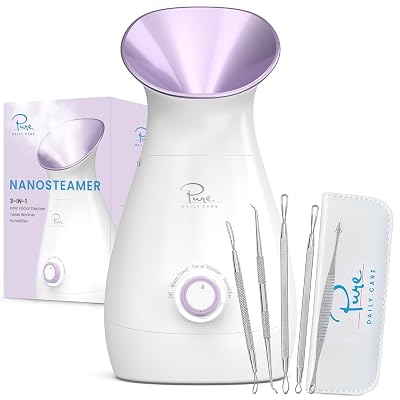
Best for: People who want a listed temperature control and a humidifier function in one unit
The listing describes a large 3-in-1 steamer with precise temperature control, a humidifier function and a bonus five-piece stainless steel skin kit. Temperature control is the feature most worth looking for, since heat level is what drives comfort and burn risk, so check how the manual says to set it.
The bonus kit contains extraction-style tools, and the listing says the steamer unclogs pores and blackheads. We could not support that claim, and dermatology sources advise leaving extractions to a licensed professional to avoid scarring.
- Temperature control
- 3-in-1 design with humidifier function
- Bonus five-piece stainless steel kit
Pros
- Listed temperature control
- Humidifier function for those who want it
Cons
- Pore and blackhead claims are unsupported
- Extraction tools invite skin damage
Skip it if: you want a plain steamer with no extra tools, or you tend to pick at blemishes.
Amconsure Nano Ionic Facial Steamer

Best for: Shoppers who want a warm mist steamer that doubles as a humidifier
The listing calls this a warm mist steamer for home spa use that can also serve as a humidifier, and it includes a bonus five-piece stainless steel skin kit. The humidifier use is the practical selling point if you want one device for both jobs.
The listing also mentions deep cleaning, unclogging pores and sinuses. Those are marketing phrases, not tested results. Steam can feel soothing, but it does not open pores, and a facial steamer is not a treatment for sinus problems.
- Warm mist
- Humidifier use
- Bonus five-piece stainless steel kit
Pros
- Dual use as steamer and humidifier
- Warm mist design
Cons
- Deep cleaning and sinus claims are unsupported
- Extraction tools are not advised for home use
Skip it if: you want a device for a medical or sinus purpose, or you prefer one without extra tools.
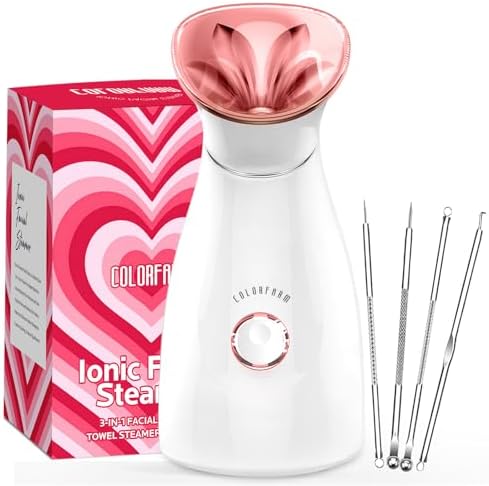
Colorfarm Nano Ionic Facial Steamer
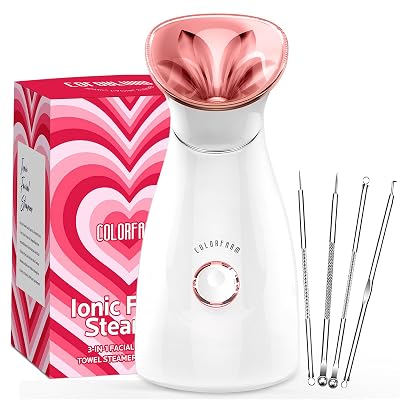
Best for: Shoppers who want a straightforward home spa steamer
The listing for this steamer is short: it describes nano ionic steam for deep cleaning in a home spa setting. That keeps the product simple, but it also means the listing gives few details to compare, such as shut-off, tank size or water guidance.
Before buying, open the listing and look for an automatic shut-off, a visible water level and the maker’s stated water type. If the page does not state them, pick a model that does. “Deep cleaning” is a marketing phrase, not a tested result.
- Nano ionic steam
- Home spa design
Pros
- Simple design
- Straightforward listing
Cons
- Few listed details to compare
- Deep cleaning claim is unsupported
Skip it if: you want clear safety specifications stated in the listing before you buy.
EZBASICS Nano Ionic Facial Steamer

Best for: People who want a basic warm mist steamer in a blue finish
The listing describes a nano ionic warm mist steamer for facial deep cleaning, sold in blue. Like the Colorfarm listing, it gives few specifics, so the comparison rests on what you can confirm in the maker’s description and manual.
Check for an automatic shut-off, a stable base and the water type the maker names. Keep sessions short, hold the nozzle at the distance the manual gives, and treat the deep cleaning wording as marketing rather than a result you should expect.
- Nano ionic warm mist
- Blue finish
Pros
- Basic design
- Warm mist output
Cons
- Few listed details
- Deep cleaning claim is unsupported
Skip it if: you need detailed safety information on the listing page or you have reactive skin.
GETANYE Nano Ionic Face Steamer

Best for: Shoppers who like extras such as a hair band and face brush
The listing describes a nano ionic steamer that works as a moisturizing spa humidifier and includes a free blackhead remover kit, a hair band and a face brush. The hair band and brush are convenient extras for a cleansing routine.
The listing also claims “10X penetration” and says it unclogs pores. Neither claim is backed by evidence we found, and nano ionic is a marketing term with no standard definition. Skip the blackhead remover and leave extractions to a professional.
- Nano ionic steam with humidifier use
- Free blackhead remover kit
- Hair band and face brush included
Pros
- Includes a hair band and face brush
- Humidifier use
Cons
- “10X penetration” claim is unsupported
- Blackhead tool is not advised for home use
Skip it if: you want a clean, claims-free listing or you are prone to picking at skin.
How We Compared
We compared maker-listed features, dermatology and government guidance, and common safety design. We did not lab-test the products, we have not used them, and we show no prices or star ratings. Where a claim comes from a maker, we say so.
Because there is no independent test data behind these listings, the most useful thing we can do is teach you what to check. The sections below explain how steam acts on skin, what the evidence says, and which design features reduce risk. Use them to read any steamer listing, including ones not shown above.
What a Nano Ionic Steamer Does
Inside the base is a small water tank and a heating element. When you switch the device on, the element heats the water until it produces vapor, and a nozzle directs it toward your face. Most home units are meant to be used with the nozzle several inches from your skin, and the exact distance and run time are set by the maker, so follow the manual.
The warmth increases blood flow near the surface for a short time, which is why skin can look slightly pink afterward, and the moisture temporarily hydrates the outer layer. That is all most skin gets from a few minutes of mist. A device that does it gently and safely is doing its job.
A steamer is sold to make skin feel soft and look fresher, so treat it as a beauty tool. The FDA decides whether skincare products are cosmetics or drugs by their intended use, meaning what it is meant to do. Claims that a product treats a disease, such as acne, would move it toward drug territory, which is one reason you should be wary of treatment language in a steamer listing.
Steam and Pores: What Is Known
A common claim is that steam opens pores so dirt can leave. Dermatology writing disagrees with the wording. A skincare industry article that reviews the myth explains that pores do not open and close because they are not muscles. Pores look bigger when dead skin, oil and debris stretch them, and they can look smaller once buildup is cleared.
What steam may do is soften material sitting in pores, which can make professional extractions easier and less painful. That is not the same as steam cleaning your pores at home. The same article says steam does not directly clear blemishes, and it advises that a home session should not be expected to match a professional facial.
| Claim | What the sources support |
|---|---|
| Steam opens pores | Not accurate. Pores are not muscles, so they do not open and close. |
| Steam cleans pores | It may soften buildup. It does not remove it on its own. |
| Steam hydrates skin | It adds moisture to the surface for a short time. The AAD, as reported, does not recommend steamers for hydration. |
| Steam boosts collagen | No scientific evidence found, according to Medical News Today. |
| Steam helps products absorb | Warm, hydrated skin may take up more product. This is plausible, but studies on steamers are lacking. |
What “Nano Ionic” Means
Makers use “nano” to suggest the droplets are very small and “ionic” to suggest the mist carries an electrical charge. Neither word has a regulated meaning for consumer steamers, and we found no independent study showing that a nano ionic steamer does more for skin than a basic warm-mist steamer. When a listing says “10X penetration” or “deep cleansing,” read it as the maker’s marketing, not as a tested result.
This is why the comparison should rest on things you can verify: the build, the safety features, how easy the tank is to clean and fill, and whether the maker states the water type and session time. A smaller droplet claim should never outweigh a missing shut-off switch.
Some steamers add a separate ozone function and describe it as sterilizing. The U.S. EPA states that ozone can damage the lungs and cause chest pain, coughing and throat irritation, and that it is not a healthy form of oxygen. We do not recommend any steamer with an ozone mode. If a listing mentions ozone, choose a different model.
Burn Safety and Hygiene
Steam burns are the main hazard. Medical News Today notes that steam burns can happen with any method and that frequent or long sessions may dry the skin. A countertop steamer reduces some risks of a bowl and towel, but hot water and hot vapor are still present, so build safety into how you use it.
- Keep the device on a flat, stable surface, out of reach of children and pets.
- Do not lean closer than the manual allows, and never cover your head with a towel over a steamer.
- Stop at once if skin stings, burns or turns very red, and let it cool before doing anything else.
- If you add essential oils or botanicals, do so only where the manual allows, and patch test a new product first, as dermatology guidance advises for any new skincare item.
- Apply sunscreen the next morning as you normally would, since warm, pink skin is more easily irritated.
- Call a doctor for blistering, pain that lasts or any burn near the eyes.
Hygiene matters because standing water breeds germs and minerals. Empty the tank after each use, rinse it, let it dry, and descale it as the manual directs. Use the water type the maker names, since some units clog or scale quickly with tap water. A dirty tank can send mist you would not want near your face.
Features to Compare
Because performance claims are hard to verify, choose on features that affect safety, cleaning and daily use. The table lists what to look for and why it matters.
| Feature | Why it matters | What to check in the listing |
|---|---|---|
| Auto shut-off | Stops the heating element if the tank runs dry or the timer ends. | The maker states an automatic shut-off or timer. |
| Stable, wide base | Reduces tipping, which is how many burns happen. | Photos of the base and weight, as stated by the maker. |
| Water-level window | Lets you see when to refill without opening a hot unit. | A visible fill line or window. |
| Tank opening size | A wide opening is easier to rinse and dry. | Photos or dimensions of the opening. |
| Water type | The wrong water can leave scale or damage the unit. | The manual or listing names distilled, filtered or tap. |
| Ozone mode | Ozone is a lung irritant and we do not recommend it. | No mention of ozone in the title, bullets or manual. |
| Warranty and support | Shows whether the maker will help if a part fails. | The maker’s stated warranty terms. |
Many makers publish the manual on the product page. Check the session time, the distance and the water type before you order, since those lines tell you how the maker expects the device to be used.
A Worked Example: A Short Steam Session
This example shows the order of steps for someone with normal skin and no skin condition. Adjust to your manual, and skip the session if your skin is irritated.
| Step | What to do | Reason |
|---|---|---|
| 1 | Wash your hands and fill the tank with the water type the manual names. | Keeps the tank clean and avoids scale. |
| 2 | Cleanse your face and pat dry. | Steam then softens a clean surface. |
| 3 | Set the nozzle at the manual’s distance and run a short session. | Limits heat exposure and drying. |
| 4 | Switch off, let skin cool, then apply a moisturizer. | Warm, hydrated skin may take up product more easily, and moisturizer helps hold the water in. |
| 5 | Empty, rinse and dry the tank. | Prevents stale water and germs. |
Common Mistakes
The most common mistake is steaming too close or too long, believing more steam does more good. The sources we read suggest that frequent or long sessions may dry skin, and there is no evidence that extra time cleans pores better.
The second is picking at blemishes right after steaming. Softened skin is easy to damage, and extractions are best left to a licensed professional to avoid scarring. The third is using ozone modes, scented water or strong botanicals without checking the manual. Finally, many people skip cleaning the tank, which turns a skincare step into a germ risk.
How to Choose in 7 Steps
- Decide whether steaming suits your skin. If you have rosacea, eczema or very reactive skin, ask a dermatologist first.
- Rule out any model that mentions ozone.
- Look for an auto shut-off or timer in the maker’s own description.
- Check the base: wide, flat and stable beats light and narrow.
- Read the water type and cleaning instructions, and choose a tank you can rinse easily.
- Ignore claims like “10X penetration” and “deep cleansing” when comparing, since they are not tested results.
- Check the warranty terms and buy from a seller that ships to the US with US plug and voltage.
Do and Do Not
Do
- Follow the manual for distance, time and water
- Keep sessions short
- Empty and dry the tank after use
- Moisturize afterward
- Stop if skin stings or feels hot
Do not
- Cover your head with a towel over the steamer
- Use a steamer with an ozone mode
- Steam sunburned, broken or inflamed skin
- Pick at pores afterward
- Let children use it unsupervised
Who Should Skip This
People with rosacea, eczema, psoriasis or other inflammatory skin conditions should ask a dermatologist before using a steamer, because heat widens blood vessels and can increase redness. The same applies to anyone with very sensitive skin, a recent chemical peel or cosmetic procedure, or a sunburn.
If your main goal is clearing congested pores or managing acne, a steamer is not the right tool. A dermatologist or licensed esthetician can recommend options that fit your skin, and over-the-counter products with a known purpose may suit you better.
Honest Limits
- A steamer does not open or close pores and does not remove them.
- It does not treat acne or any skin condition, and it is not a substitute for medical care.
- We found no independent evidence that a nano ionic steamer outperforms a basic warm-mist steamer.
- Results vary with skin type, water, device and how it is used.
- Research on facial steaming is limited, and much of the support is anecdotal.
- This guide compares listings, not lab results, so check the maker’s specifications yourself.
When to See a Professional
See a dermatologist if you have a skin condition, if steaming leaves your face red, stinging or swollen, or if you want help with persistent congestion or breakouts. See a doctor for blistering, a burn that is painful or near the eyes, or any breathing symptoms after using a device. This page is general information and does not replace advice from a licensed clinician.
Frequently Asked Questions
Does a face steamer open pores?
No. Pores are not muscles, so they do not open and close. Steam may soften oil and dead skin sitting in pores, which can make buildup easier to remove later, but a home steamer does not clean pores by itself or change their size.
Is a nano ionic steamer better than a regular one?
We found no independent study showing it is. Nano and ionic are marketing words without a regulated meaning for home steamers. Compare safety features, ease of cleaning and the maker’s stated water type and session time instead of droplet-size claims.
How often can I use a facial steamer?
There is no standard schedule in the sources we read. Frequent or long sessions may dry the skin. Follow the maker’s manual for session length, start with infrequent short sessions, and stop if your skin feels tight, red or irritated.
What type of water should I use in a face steamer?
Use the water type the maker names in the manual. Some units specify distilled or filtered water because tap water can leave mineral scale that clogs the nozzle. Empty and dry the tank after use so water does not stand.
Is facial steaming safe for rosacea or eczema?
It may not be. Heat widens blood vessels and can increase redness and inflammation, and Medical News Today advises people with rosacea, eczema or psoriasis to avoid steaming. Ask a dermatologist before using any steamer if you have an inflammatory skin condition.
Can steaming help skincare products absorb?
It is plausible. Warm, hydrated skin may take up more product, and one industry article describes added moisture as helping absorption. Research on steamers specifically is limited, so treat it as a possible bonus, not a promise.
Why do you not recommend steamers with an ozone mode?
The U.S. EPA states that ozone can damage the lungs and cause coughing, chest pain and throat irritation, and that it is not a healthy form of oxygen. A skincare step is not worth that risk, so choose a model without ozone.
How do I avoid burns from a face steamer?
Place the unit on a flat, stable surface, keep your face at the distance the manual gives, do not cover your head with a towel, and keep children away. Choose a model with an automatic shut-off, and stop if skin stings or feels hot.
Should I use a steamer before or after cleansing?
A common order is to cleanse first, steam briefly, then moisturize. Steaming on a clean surface avoids warming dirt into the skin. Follow your manual, avoid harsh scrubs afterward, and apply sunscreen the next morning as usual.
Can a face steamer treat acne or clear blackheads?
No. A steamer is a cosmetic tool and cannot treat acne. Steam may soften buildup, but it does not clear blemishes on its own. For persistent acne or blackheads, see a dermatologist or a licensed esthetician for advice.
Bottom Line
A nano ionic face steamer is a pleasant, low-stakes skincare accessory when it is built safely and used briefly. It will not open or close pores, treat acne or deliver deep cleaning, and the nano ionic label is a marketing phrase, not a proven advantage.
Pick on the things you can verify: a stable base, an auto shut-off, an easy-to-clean tank, a stated water type and no ozone mode. If you have rosacea, eczema or reactive skin, talk to a dermatologist first, and expect modest results.
Related reading: Facial wands sold as collagen boosters: what the evidence says | At-home IPL hair removal: how to choose safely